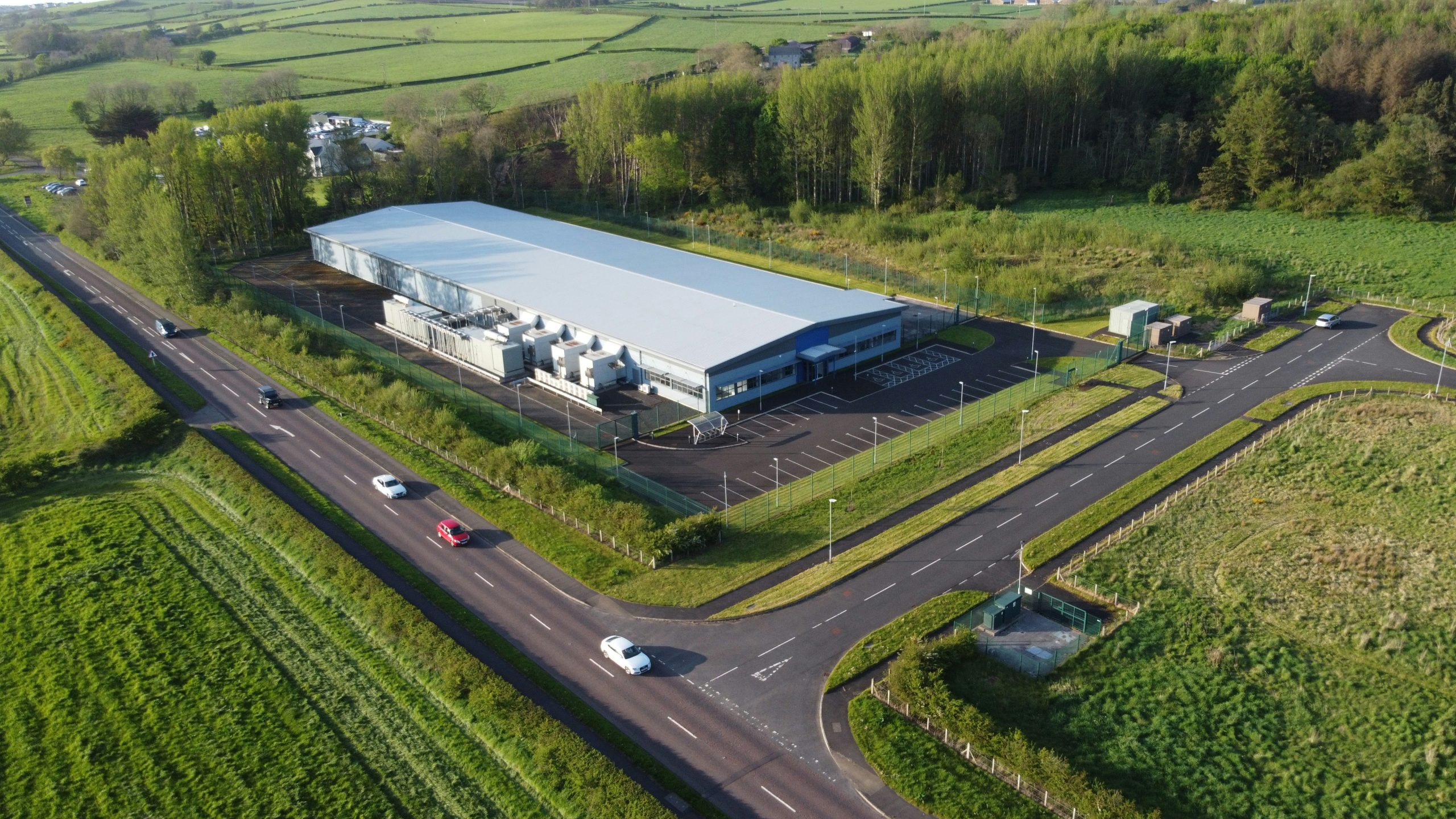
Land with data centre potential can be highly attractive to investors and landowners, but it is crucial to understand that returns are entirely dependent on the specific site’s suitability, not merely the label “data centre potential.” This is a complex and capital-intensive sector where the intrinsic value of a parcel of land is dictated by its verifiable infrastructure and regulatory alignment, rather than broad market sentiment. Independent professional advice is essential before any commitment.
What Are the Key Risks in Data Centre Land Investment?
Investing in land earmarked for data centre development carries substantial risks that can severely impact viability and returns. Unlike more conventional land uses, data centres have extremely specific and non-negotiable requirements, making many seemingly suitable sites entirely unsuitable upon closer inspection. Understanding these risks upfront is paramount for any potential investor.
Grid Delays and Capacity Constraints
Perhaps the most significant risk is the availability and capacity of the electricity grid. Data centres are enormous consumers of power, often requiring many megawatts (MW) of dedicated supply. Securing this capacity is not just about proximity to a substation; it involves complex negotiations with Distribution Network Operators (DNOs) and National Grid. The process of upgrading local grid infrastructure, installing new substations, and securing high-voltage connections can take many years – often five to ten years or more – and incur immense costs, running into tens or even hundreds of millions of pounds. Without confirmed grid capacity and a realistic timeline for connection, any land, regardless of its other attributes, is effectively worthless for data centre development. Investors frequently underestimate the scale and lead time of grid upgrades, leading to projects being indefinitely stalled or abandoned.
Planning Refusal and Regulatory Hurdles
Planning permission for a data centre is far from guaranteed. Local authorities often have conflicting priorities: on one hand, they may recognise the economic benefits of such developments; on the other, they must contend with concerns about environmental impact, noise pollution (from cooling systems), visual impact of large, windowless buildings, increased traffic during construction, and the perceived energy footprint. The sheer scale of a modern data centre often means it is classified as a Nationally Significant Infrastructure Project (NSIP) or requires extensive environmental impact assessments. Navigating the planning system can be lengthy, costly, and subject to significant public opposition. A site might appear ideal but could be located within an area with strict planning policies, such as Green Belt land, Areas of Outstanding Natural Beauty, or near residential zones, making approval highly unlikely. Furthermore, regulatory landscapes are evolving, with increasing scrutiny on energy efficiency, renewable energy sourcing, and water consumption, adding layers of complexity to the planning process.
Long Timescales and Capital Lock-up
Data centre development is not a short-term endeavour. From site acquisition and initial due diligence to securing grid connections, obtaining planning permission, and finally construction, the entire process can easily span five to fifteen years. This protracted timeline means capital is locked up for extended periods, exposed to market fluctuations, interest rate changes, and evolving technological requirements. The initial investment in land is just the tip of the iceberg; significant funds are required for surveys, reports, legal fees, grid connection costs, and planning applications before a spade even touches the ground. Investors must have a robust financial capacity and a long-term outlook, understanding that liquidity will be constrained for many years.
Speculative Buying Without Verified Suitability
A common pitfall is the speculative acquisition of land based on its perceived proximity to existing data centres or major fibre routes, without undertaking rigorous, site-specific due diligence. Such purchases are often driven by hype rather than verifiable facts. Landowners or developers may market a parcel as having “data centre potential” without any firm grid capacity offers, detailed geological surveys, or pre-application planning consultations. Buying into such a proposition is highly speculative. The intrinsic value of data centre land is not determined by its general location but by its verified readiness for development, which includes confirmed power, fibre, and planning feasibility. Without this granular assessment, investors risk acquiring land that is fundamentally unsuitable, leading to significant financial losses when the reality of infrastructure constraints or planning barriers becomes apparent.
Why Does Assessing Suitability Before Committing Capital Separate Informed Investors from Speculators?

The difference between a successful data centre land investment and a costly speculative gamble lies entirely in the depth and rigour of the pre-acquisition assessment. Informed investors understand that a data centre site is a highly specialised asset whose value is derived from a unique confluence of technical, logistical, and regulatory factors. They recognise that the label “data centre potential” means little without a comprehensive, site-specific viability study.
Power Availability and Resiliency
The single most critical factor is power. A data centre cannot exist without a massive, reliable, and resilient power supply. Informed investors scrutinise:
- Capacity: Is there sufficient megawatts available from the local grid?
- Connection Point: What is the voltage and distance to the nearest suitable grid connection point?
- Feasibility: Is it technically and financially feasible to upgrade existing infrastructure or build new infrastructure to serve the site?
- Redundancy: Can the site be supplied by diverse power routes or substations to ensure resilience (N+1 or 2N redundancy)?
- Timeline: What is the realistic timeline for securing and delivering the required power?
- Cost: What are the estimated connection costs, reinforcement charges, and ongoing power tariffs?
Speculators often assume power is simply “there” if a site is near a town or industrial estate. Informed investors commission detailed grid capacity studies and engage directly with DNOs and National Grid to get firm offers and timelines.
Planning Feasibility and Local Authority Engagement
Planning permission is not a checkbox; it is a complex, iterative process. Informed investors will:
- Review Local Plans: Assess the site’s zoning and any specific policies that might impact data centre development.
- Pre-application Discussions: Engage early with the local planning authority to gauge their appetite for a data centre, understand their concerns, and identify potential issues.
- Environmental Impact Assessment: Commission preliminary studies for noise, air quality, visual impact, traffic, and ecology to identify red flags.
- Stakeholder Engagement: Understand potential local opposition and strategise mitigation.
Speculators might view planning as a bureaucratic hurdle to overcome later, potentially after purchase. Informed investors treat planning as a fundamental determinant of viability, often conducting extensive pre-application work before committing significant capital.
Connectivity and Fibre Infrastructure
Data centres are the hubs of the internet, requiring ultra-high-speed, redundant fibre optic connectivity to other networks and internet exchange points. Informed investors assess:
- Fibre Proximity: Is the site near major long-haul fibre routes?
- Carrier Diversity: Can the site access multiple, diverse fibre providers (Tier 1 carriers)?
- Latency: How does the site’s location impact latency to key markets and peering points?
- Redundancy: Are there diverse fibre entry points and routes available to ensure network resilience?
Speculators might assume fibre is universally available. Informed investors verify existing fibre infrastructure, assess the cost and feasibility of extending fibre to the site, and evaluate the potential for carrier diversity.
Accessibility and Logistics
While not as critical as power or fibre, accessibility impacts construction costs, operational efficiency, and staff recruitment. Informed investors consider:
- Road Network: Is there good access to major road networks for heavy construction vehicles and ongoing deliveries?
- Labour Pool: Is there a local skilled labour pool for construction and ongoing operations?
- Security: Can the site be securely accessed and monitored?
- Topography and Geotechnical Conditions: Is the land relatively flat and stable, minimising expensive groundworks?
Speculators might overlook logistical challenges that can add significant costs and delays. Informed investors ensure the site is practical for both construction and long-term operation.
By systematically evaluating these critical factors before committing capital, informed investors de-risk their investment, transforming a high-stakes gamble into a calculated strategic acquisition. This rigorous due diligence prevents the purchase of “stranded assets” – land that looks promising but is fundamentally unusable for its intended purpose.
How Can Data Centre Land Suitability Be Assessed?

Assessing land for data centre suitability requires a multi-faceted approach, combining technical analysis, regulatory understanding, and market insight. It’s a complex process that moves far beyond a simple visual inspection or postcode analysis. Specialised tools and expert advice are crucial to navigate the intricacies of this sector.
Utilising Advanced Screening Tools
To efficiently filter out unsuitable sites and focus on those with genuine potential, advanced screening tools are invaluable. These tools leverage geospatial data, infrastructure maps, and planning policy information to provide an initial, high-level assessment.
Instant Classification Report (ICR)
An Instant Classification Report (ICR) provides a rapid, initial health check for a given land parcel. This report offers a quick, indicative assessment of a site’s basic suitability for data centre development. It typically highlights immediate red flags related to major infrastructure proximity (power lines, fibre routes) and some preliminary planning considerations (e.g., Green Belt status). The ICR is designed for a first-pass screening, allowing investors to quickly determine if a site warrants further, more detailed investigation without significant upfront investment in time or resources. It’s an essential tool for initial portfolio review or when evaluating numerous potential sites.
Land Intelligence Report (LIR)
The Land Intelligence Report (LIR) takes the assessment to the next level, offering a more comprehensive and detailed analysis. An LIR delves deeper into critical infrastructure, providing more granular insights into power availability, fibre connectivity, and potential planning constraints. This report synthesises various data points, including DNO network maps, fibre optic network overlays, flood risk data, and detailed planning policy extracts specific to the parcel. The LIR aims to provide a robust technical overview, identifying both opportunities and significant challenges. It helps investors understand the complexities of a site before engaging in costly on-the-ground surveys or extensive expert consultations. This report is ideal for narrowing down a shortlist of sites and understanding the specific hurdles each potential parcel presents.
Full Parcel Viability (FPV)
The Full Parcel Viability (FPV) assessment represents the most in-depth and comprehensive analysis. This is a full-scale due diligence report, providing a definitive viability statement for a specific land parcel. An FPV incorporates detailed site-specific investigations, including:
- Grid Capacity Studies: Direct engagement with DNOs to secure formal grid connection offers and detailed timelines.
- Geotechnical Surveys: Analysis of ground conditions, contamination, and topography.
- Environmental Impact Assessments: Detailed studies on noise, air quality, ecology, and water usage.
- Planning Policy Review: Expert interpretation of local and national planning policies and pre-application discussions with authorities.
- Fibre Connectivity Audit: Verification of carrier diversity, fibre routes, and potential costs for connection.
- Flood Risk and Natural Hazards: Comprehensive assessment of all environmental risks.
- Access and Logistics Review: Detailed analysis of site accessibility for construction and operations.
The FPV culminates in a clear assessment of a site’s technical, commercial, and regulatory viability, often accompanied by estimated timelines and cost implications for development. This report is critical before making any firm acquisition decisions or committing substantial development capital.
Understanding the Importance of Holistic Due Diligence
No single factor dictates a site’s suitability. A prime location with excellent fibre might be useless without sufficient power. Abundant power might be negated by insurmountable planning restrictions. Holistic due diligence considers the interplay of all critical elements:
- Power: Is it available, resilient, cost-effective, and deliverable within a realistic timeframe?
- Fibre: Is there diverse, high-capacity fibre, and is it accessible?
- Planning: Is development likely to be permitted, and what are the associated conditions and timescales?
- Geology: Are ground conditions stable, and is the site free from significant contamination or flood risk?
- Logistics: Is the site accessible for construction and operations, and are there skilled labour resources nearby?
- Environment: What are the environmental sensitivities and potential mitigation requirements?
An informed investor employs a systematic process, starting with high-level screening (like an ICR), moving to detailed analysis (LIR), and culminating in comprehensive, site-specific investigations (FPV) before making any acquisition or development decisions. This phased approach saves time and money by ruling out unsuitable sites early and focusing resources on the most promising opportunities.
Is Land With Data Centre Potential a Good Investment?
This is the central question for many, and the direct answer is: potentially, but only if the ‘potential’ is rigorously verified and can be realised. It is not a guaranteed good investment by any means. The attractiveness of land for data centres is highly contextual and site-specific.
The market for data centre capacity is experiencing robust growth globally, driven by cloud computing, AI, IoT, and increasing digital transformation. This strong demand often leads to high land values for truly viable sites. However, the scarcity of genuinely suitable sites – those with sufficient power, fibre, and planning feasibility – means that most land advertised as having “data centre potential” does not meet the stringent criteria.
A good investment in this sector involves acquiring a site where the complex puzzle pieces of infrastructure, regulation, and logistics align perfectly, or where the challenges, though present, are surmountable within a viable timeframe and budget. This requires extensive due diligence that goes far beyond a simple location analysis.
Investors who succeed in this space are those who understand the highly technical nature of data centre development. They do not merely buy land; they acquire access to critical infrastructure and a clear pathway to obtaining planning permission. Without verified grid capacity and a clear route to planning consent, any land purchase is a speculative gamble, irrespective of market demand for data centres.
Returns, if realised, can be significant due to the high value placed on operational data centre assets. However, the path to achieving these returns is long, capital-intensive, and fraught with specific risks that are unique to this sector. It is imperative to remember that the value is not in the dirt itself, but in the verified ability to build and operate a high-demand, high-performance digital infrastructure asset on that dirt.
How Do I Assess Land Before Buying?
| Metric | Description | Considerations | Impact on Investment |
|---|---|---|---|
| Location | Proximity to major internet hubs and fiber optic networks | Closer proximity reduces latency and connectivity costs | High impact – better locations attract more tenants |
| Power Availability | Access to reliable and scalable electricity supply | Data centers consume large amounts of power; renewable options preferred | Critical – affects operational costs and sustainability |
| Land Cost | Price per acre or square foot of land | Lower cost can improve ROI but may indicate less desirable location | Moderate – balance cost with other factors |
| Regulatory Environment | Local zoning laws, permits, and data center-friendly policies | Supportive regulations speed up development and reduce risks | High – can make or break project feasibility |
| Climate | Temperature and humidity levels affecting cooling costs | Cooler climates reduce cooling expenses and improve efficiency | Moderate to High – impacts operational costs |
| Water Availability | Access to water for cooling systems | Essential for certain cooling technologies; scarcity can be a risk | Moderate – affects operational sustainability |
| Market Demand | Demand for data center space in the region | Growing demand increases rental income potential | High – drives revenue and occupancy rates |
| Infrastructure | Availability of roads, security, and backup systems | Good infrastructure supports smooth operations and maintenance | Moderate – influences operational reliability |
| Environmental Risks | Flood zones, seismic activity, and other natural hazards | Higher risks increase insurance and mitigation costs | High – affects long-term viability and insurance premiums |
Assessing land before buying, especially for a highly specialised use like a data centre, requires a structured and detailed approach. It involves a progressive funnel of investigation, starting broad and becoming increasingly granular.
Initial Desktop Screening
Begin with a high-level desktop assessment. This involves:
- Location Analysis: Proximity to major fibre routes, existing data centre clusters, and electricity substations.
- Basic Planning Review: Check the local planning authority’s website for the site’s zoning, any immediate planning designations (e.g., Green Belt, Conservation Area), and local plan policies.
- Flood Risk: Utilise publicly available flood maps to assess basic flood risk.
- Topography: Look at elevation maps to identify any steep gradients or significant groundworks challenges.
- Access: Review satellite imagery for road access and potential ingress/egress points.
Tools like the Instant Classification Report (ICR) are ideal for this stage, providing a rapid, indicative assessment to quickly filter out obviously unsuitable sites.
Detailed Technical Analysis
For sites that pass the initial screening, move to a more detailed technical investigation. This is where the bulk of the risk mitigation occurs:
- Grid Capacity: Engage with the relevant Distribution Network Operator (DNO) to inquire about available capacity at nearby substations. Request budget estimates and timelines for connection. This often involves submitting a formal Point of Connection (POC) application.
- Fibre Infrastructure: Identify major fibre providers in the area and investigate the proximity and availability of diverse fibre routes to the site. Obtain initial estimates for fibre connection costs and lead times.
- Planning Pre-application: Initiate formal pre-application discussions with the local planning authority. Present a high-level concept for a data centre and solicit their feedback on planning policy alignment, potential concerns, and required assessments.
- Environmental & Geotechnical Review: Commission preliminary environmental screens (e.g., noise, air quality, ecological desktop study) and a desk-based geotechnical assessment to identify potential ground conditions or contamination issues.
- Utility Surveys: Identify all other utilities (water, gas, sewerage) and their proximity and capacity.
A Land Intelligence Report (LIR) provides an excellent framework and synthesis of data for this stage, offering a comprehensive technical overview and highlighting key challenges that need deeper investigation.
Full Due Diligence and Expert Consultation
For the strongest candidate sites, a full-scale due diligence exercise is imperative before making any purchasing decision. This stage typically involves:
- Formal Grid Connection Offer: Secure a firm offer from the DNO, including detailed costs, scope of works, and committed timelines. This is often a non-negotiable prerequisite.
- Comprehensive Planning Strategy: Develop a detailed planning application strategy, commissioning all necessary expert reports (e.g., full Environmental Impact Assessment, noise assessments, visual impact assessments, traffic surveys).
- Detailed Geotechnical Surveys: On-site boreholes and ground investigations to verify ground conditions, identify any contamination, and inform foundation design.
- Legal Review: Thorough review of land titles, covenants, easements, and any potential legal encumbrances.
- Cost & Timeline Modelling: Develop detailed financial models and project timelines incorporating all identified costs and lead times for infrastructure, planning, and construction.
- Expert Consultation: Engage specialist data centre consultants, planning lawyers, grid connection consultants, and environmental consultants to provide expert advice and risk mitigation strategies.
The Full Parcel Viability (FPV) assessment summarises and synthesises all these elements, offering a definitive statement on the site’s suitability and the associated development pathway. It is the cornerstone of an informed investment decision.
Always seek independent professional advice tailored to your specific circumstances. Do not proceed without a comprehensive, multi-faceted assessment of the site’s viability.
Screen your site first.